Transaction Audits Aligning Bonus Claims Across Slot Sequences and Live Table Entries
Written by Yara Wolf · Aug 15, 2026
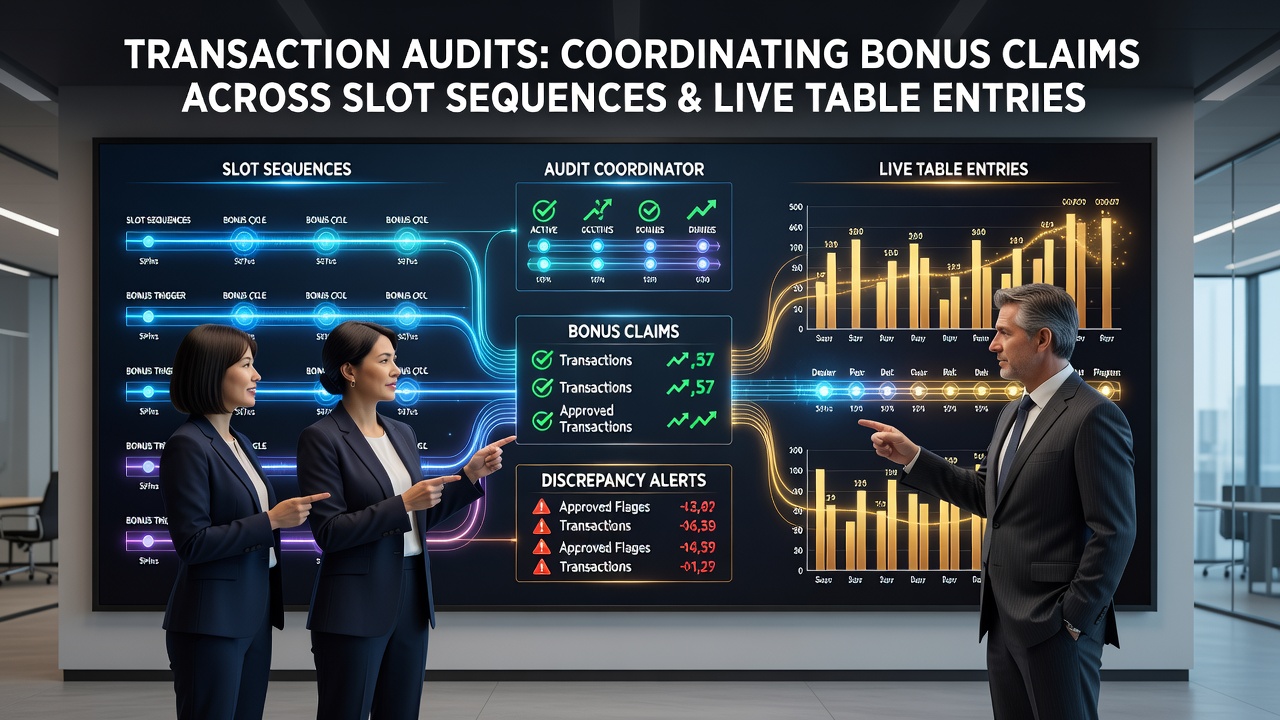
Transaction Audits Aligning Bonus Claims Across Slot Sequences and Live Table Entries
Transaction audits serve as the backbone for coordinating bonus claims when players move between slot sequences and live table entries in digital casino environments. Systems track every deposit, wager, and payout through sequential logs that link slot machine spins with real-time table game activity, and auditors verify that bonus eligibility remains consistent across both formats. Data from multiple platforms shows these audits prevent duplicate claims while confirming that promotional credits apply correctly once players shift from automated reels to dealer-led rounds.
Core Mechanisms in Audit Coordination
Operators deploy centralized ledgers that record timestamps, bet amounts, and game identifiers for every transaction, which allows auditors to cross-reference slot sequences against live table entries within the same player session. When a bonus triggers after a series of slot spins, teh system flags the credit and holds it until the player initiates a live table round, at which point the audit process confirms the original qualifying activity still meets the operator's terms. Research from the New Jersey Division of Gaming Enforcement indicates that integrated audit trails reduce claim disputes by aligning payout records across game types.
Slot sequences generate rapid micro-transactions that accumulate quickly, whereas live table entries produce fewer but higher-value actions, and auditors must reconcile these differing rhythms without creating gaps in bonus tracking. Software platforms use algorithmic matching to pair each bonus-eligible wager with its corresponding claim, even when players alternate between formats multiple times in one session. Observers note that this matching becomes especially relevant during peak hours when transaction volumes spike.
Handling Slot Sequence Specifics
Slot sequences often involve consecutive spins that build toward bonus thresholds, and audit protocols capture every spin result alongside the exact stake used. This level of detail lets reviewers verify whether a player satisfied wagering requirements before attempting to redeem the same bonus on a live table. Figures reveal that platforms processing over 10,000 slot transactions per hour rely on automated reconciliation engines to flag any mismatch before the claim reaches the payout stage.
Players who complete a slot sequence and immediately join a live blackjack or roulette table benefit from these coordinated checks, because the audit system carries forward the verified bonus status without requiring manual intervention. Case examples from operators show that seamless handoffs reduce processing delays and maintain player continuity across game categories.
Integration with Live Table Entries
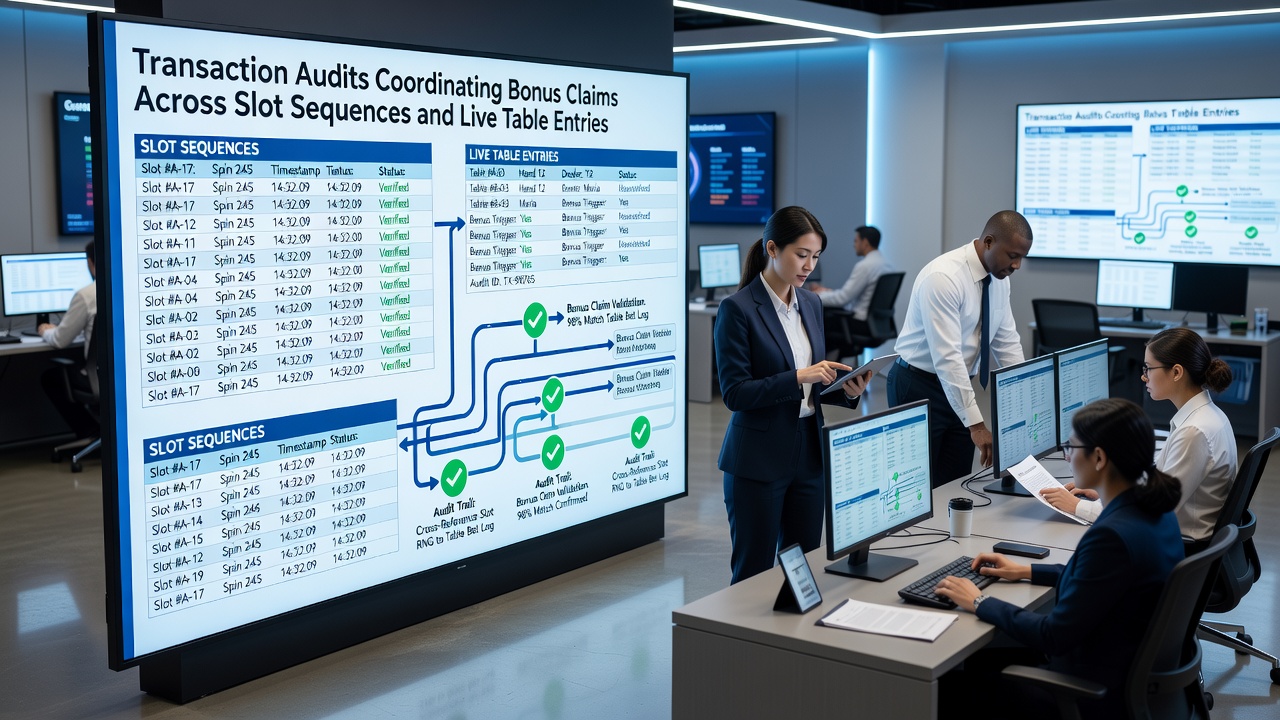
Live table entries introduce human-paced interactions that contrast with the automated flow of slots, yet the same transaction audit framework applies. Auditors examine dealer-confirmed results and player decisions in real time, matching them against prior slot activity to ensure bonus conditions remain intact. Data compiled by the Victorian Responsible Gambling Foundation highlights how cross-format verification supports accurate bonus distribution when players transition between game styles.
During August 2026, several platforms reported upgrades to their audit modules that improved synchronization between slot sequences and live tables, particularly in handling multi-stage bonuses that span both environments. These updates allow the system to pause a bonus claim mid-sequence if a player switches to a live table, then resume verification once the table round concludes.
Common Challenges and Resolution Patterns
Discrepancies arise when network latency affects live table reporting or when slot sequences experience brief interruptions, and auditors address these by reviewing secondary logs that capture the full transaction path. One documented instance involved a player completing a slot sequence on one device and joining a live table on another, requiring the audit team to merge device-specific records before approving the bonus claim. Such cases demonstrate why robust cross-device tracking forms a standard component of modern audit procedures.
Operators also manage scenarios where bonus terms differ slightly between slot and table categories, which demands precise rule-mapping within the audit software. This mapping ensures that a claim initiated in slots meets the stricter requirements sometimes applied to live table play before final approval occurs.
Conclusion
Transaction audits continue to evolve as the primary method for coordinating bonus claims across slot sequences and live table entries, delivering consistent verification that supports both player expectations and regulatory compliance. As platforms refine their systems in response to increasing cross-format activity, the emphasis remains on accurate record linkage and timely reconciliation to maintain smooth operations throughout the casino environment.