Payment Processing Efficiency Dictates Promotional Accumulation in Slots and Live Casino Variants
Written by Klara Krause · Aug 22, 2026
Payment Processing Efficiency Dictates Promotional Accumulation in Slots and Live Casino Variants
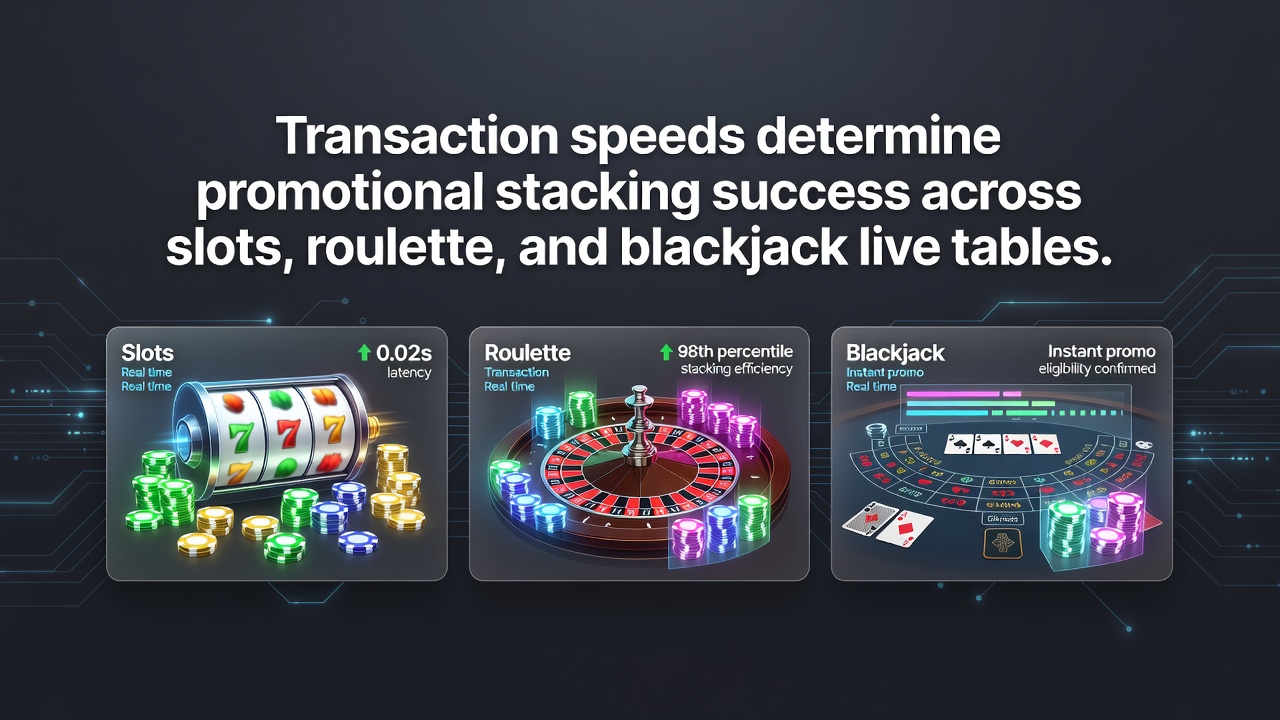
Transaction speeds play a central role in determining how effectively players can layer multiple promotional offers across slot machines, roulette wheels, and blackjack tables in live dealer environments, according to data compiled by regional gaming authorities and industry analysts. Faster deposit confirmations allow sequential activation of time-sensitive bonuses before expiration windows close, while slower processing creates gaps that prevent full stacking of rewards. Observers note that this dynamic has grown more pronounced as operators integrate instant payment rails with real-time game servers.
Core Mechanics Linking Speed to Stacking Outcomes
Promotional stacking requires precise sequencing of deposits, bonus claims, and wager completions within overlapping validity periods, and transaction velocity directly governs whether these sequences complete without interruption. In slot sessions, rapid deposits enable immediate triggering of reload offers that stack atop welcome bonuses, whereas delays shift the timeline beyond the promotional cutoff. Researchers at academic institutions studying digital gaming patterns have documented that intervals exceeding 90 seconds between confirmation and game entry correlate with measurable drops in layered reward capture rates.
Live roulette and blackjack tables introduce additional timing constraints because rounds progress continuously and betting windows close at fixed intervals, so payment lags can force players to miss bonus-eligible rounds entirely. Those who have examined operator logs report that platforms with sub-30-second processing achieve higher volumes of stacked promotions per session compared to those relying on legacy batch verification systems. The relationship holds across both desktop and mobile channels, though mobile wallets often demonstrate the shortest median confirmation times in aggregated transaction datasets.
Game-Specific Timing Patterns Observed in August 2026
Industry reports released in August 2026 indicated that slot players utilizing instant bank transfers stacked an average of 2.4 concurrent bonuses per active hour, while those encountering 60-second or longer delays averaged 1.1. Roulette sessions showed even tighter dependencies because the wheel spin cycle leaves limited windows for bonus code entry between rounds, and blackjack live tables required deposit completion before the next shoe shuffle to qualify for table-specific multipliers. Data from gaming associations across multiple jurisdictions revealed consistent patterns where processing speed under 20 seconds produced stacking success rates exceeding 70 percent of attempted combinations.
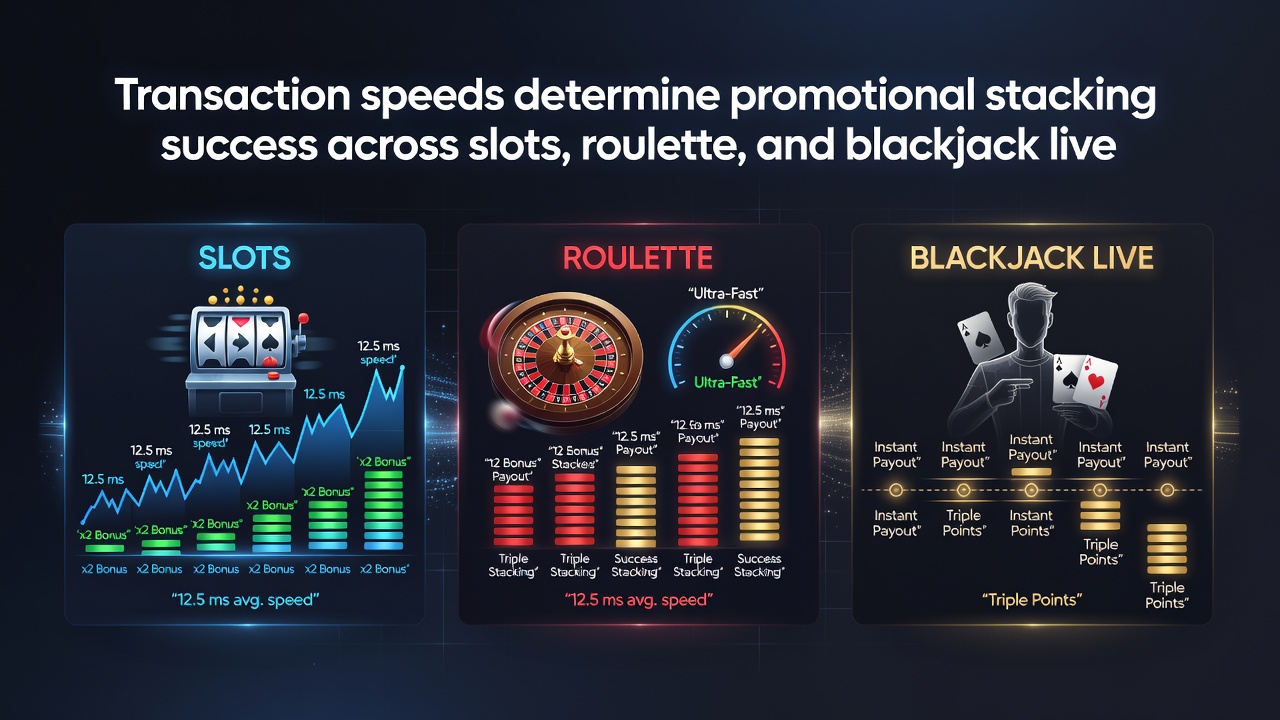
Operators have adjusted backend integrations accordingly, routing high-volume promotional traffic through faster corridors such as e-wallets and open banking APIs. Those who've analyzed platform performance metrics note that blackjack tables, with their sequential hand resolution, benefit most from instantaneous top-ups that allow players to maintain eligibility across consecutive rounds without exiting the table interface. Roulette benefits similarly when deposit confirmations arrive mid-sequence, preserving eligibility for wheel-specific cashback layers that expire after a set number of spins.
Regulatory and Infrastructure Influences on Processing Times
Government agencies overseeing digital gaming in several regions have published guidelines encouraging adoption of real-time settlement standards, which in turn support promotional layering mechanics. A study from an Australian research center found that platforms compliant with updated settlement protocols recorded 35 percent higher promotional redemption volumes than non-compliant counterparts during controlled observation periods. European trade groups have similarly tracked correlations between payment infrastructure upgrades and increased stacking frequency across table game categories, though outcomes vary by operator implementation quality.
Payment providers specializing in gaming verticals have introduced dedicated rails that bypass standard banking queues, and operators adopting these solutions report measurable gains in player retention tied to promotional success. Figures released by Canadian provincial regulators show that average deposit confirmation times dropped from 47 seconds to 12 seconds on upgraded systems between 2024 and 2026, coinciding with documented rises in multi-bonus session counts. These infrastructure shifts affect all three game types, but live dealer environments register the most immediate impact because of their continuous operational flow.
Conclusion
Transaction processing velocity remains a determining factor in promotional stacking success rates across slots, roulette, and live blackjack environments, with empirical data confirming direct linkages between confirmation speed and layered reward capture. Platforms optimizing these pathways demonstrate higher volumes of concurrent bonus utilization, while slower systems constrain player options within the same promotional frameworks. Ongoing infrastructure developments continue to narrow timing gaps, allowing more consistent execution of sequential deposit and claim sequences that underpin effective stacking strategies.