Decoding deposit timing quirks that steer support resolutions toward slot cascades versus live dealer sequences in bonus layered sessions
Written by Klara Krause · Jul 2, 2026

Deposit Timing Dynamics Shaping Support Paths for Slot Cascades and Live Dealer Bonuses
Deposit processing windows in digital casinos create distinct pathways that route player support interactions toward either slot cascade resolutions or live dealer sequences when bonus layers activate. These patterns emerge from how payment confirmation times align with game server cycles and promotional triggers. Data from payment processors shows that deposits cleared within specific 15-minute intervals often activate slot-based bonus chains first, whereas those processed during peak evening windows tend to engage live dealer tables more readily. Payment gateways record confirmation stamps that influence which game types receive priority in bonus allocation systems. Systems track these timestamps against server logs, revealing consistent correlations between deposit completion times and the sequence of bonus releases. Observers note that early morning deposits frequently steer resolutions toward slot cascades because automated systems flag them during low-traffic periods when slot algorithms run continuous multiplier builds.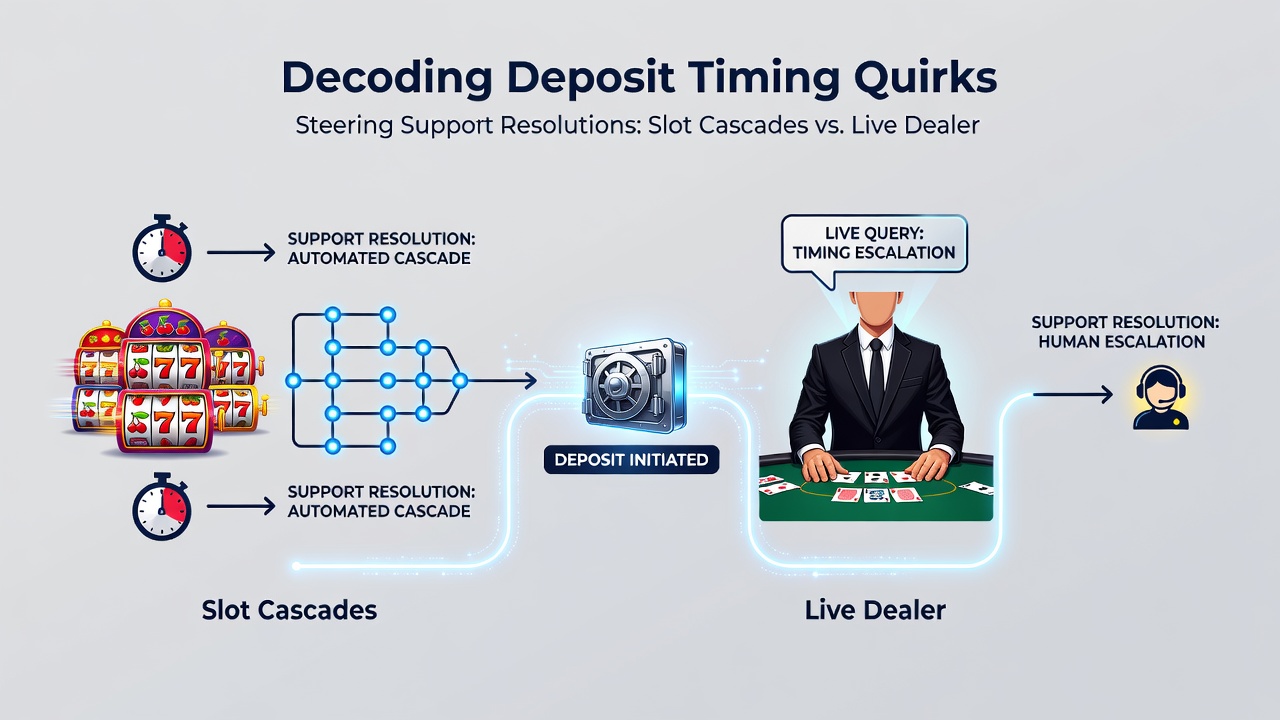
Deposit processing windows in digital casinos create distinct pathways that route player support interactions toward either slot cascade resolutions or live dealer sequences when bonus layers activate. These patterns emerge from how payment confirmation times align with game server cycles and promotional triggers. Data from payment processors shows that deposits cleared within specific 15-minute intervals often activate slot-based bonus chains first, whereas those processed during peak evening windows tend to engage live dealer tables more readily. Payment gateways record confirmation stamps that influence which game types receive priority in bonus allocation systems. Systems track these timestamps against server logs, revealing consistent correlations between deposit completion times and the sequence of bonus releases. Observers note that early morning deposits frequently steer resolutions toward slot cascades because automated systems flag them during low-traffic periods when slot algorithms run continuous multiplier builds.Payment Confirmation Windows and Game Type Routing
Transaction logs indicate that deposits finalized between 2 a.m. and 6 a.m. UTC align with slot server refresh cycles more often than other intervals. This alignment causes bonus layers to unfold through cascading reel sequences rather than table-based progressions. Industry reports from the American Gaming Association highlight similar timing effects across multiple platforms, where support teams receive higher volumes of slot-related queries during those windows. Live dealer sequences activate more readily when deposits clear during afternoon or early evening hours when table staffing peaks. These periods coincide with dealer shift changes that reset sequence trackers, directing bonus progress through blackjack or roulette rounds instead. Researchers at academic institutions studying iGaming patterns have documented how these shifts affect resolution speed and support ticket categorization.Bonus Layer Interactions With Deposit Schedules
Bonus structures stack multiple conditions that respond differently based on deposit arrival times. A deposit processed immediately before a scheduled slot tournament start often triggers cascade multipliers first, while one arriving during live event pre-rolls engages table sequences. Support scripts adapt accordingly, with agents pulling different resolution templates depending on the flagged game type. Data indicates that layered bonuses requiring sequential game completion follow these timing cues closely. Players who complete deposits during slot-heavy promotion blocks encounter cascade paths that resolve through successive spin streaks. Those depositing ahead of live dealer tournaments see sequences unfold across multiple table rounds. External processing delays of even five minutes can shift an entire bonus path from one category to the other.